

Stem Cell
What Are
Stem Cells?
Stem cells are cells with the potential to develop into various types of cells that make up the body’s tissues.
They also play a crucial role in repairing damaged tissues or cells and possess the ability to self-renew indefinitely
through continuous proliferation. These stem cells can differentiate into multiple tissues and organs
throughout the body, contributing either directly or indirectly to regeneration and repair.


Four Essential
Cell Types for
Regeneration
-
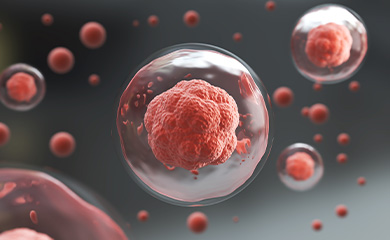
Stem Cells
For platelet-rich plasma (PRP) therapy to be clinically
effective, the presence of stem cells is essential. -
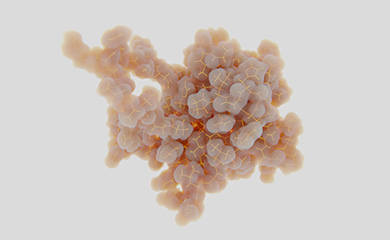
Growth Factors
Growth factors stimulate cell division, growth, and differentiation, and guide stem cells to areas
where regeneration is needed. -
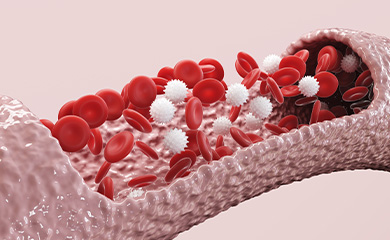
White Blood Cells
Comprising granulocytes, monocytes, and lymphocytes,
these immune cells defend against and attack infections. -
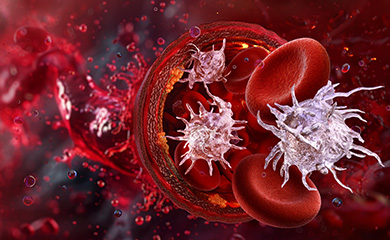
Platelets
Present in peripheral blood and primarily produced in the bone marrow, platelets are responsible for hemostasis.
They contain healing-related α-granules and have
the ability to stimulate stem cells.
Types of Stem Cells
-
Types
-
Embryonic Stem Cells
-
Induced Pluripotent
Stem Cells (iPSCs) -
Adult Stem Cells
Stem cells are broadly classified into embryonic stem cells,
induced pluripotent stem cells, and adult stem cells.
Embryonic stem cells are derived from embryos formed after fertilization and possess the ability to differentiate into all types of cells. Induced pluripotent stem cells share characteristics similar to embryonic stem cells but are generated
by introducing specific genes or proteins into somatic cells to reprogram them.
Lastly, adult stem cells are obtained from already developed tissues or organs present in individuals of all ages and exhibit tissue-specific characteristics depending on their origin. Representative sources of stem cells include
blood, bone marrow, and adipose tissue.
-
Point 01
Embryonic Stem Cells
Embryonic stem cells are derived from embryos up to 14 days after fertilization; beyond this stage, the embryo is classified as a fetus. These cells possess pluripotent differentiation potential, enabling them to develop into all types of tissues. However, due to ethical considerations and regulatory restrictions, their clinical use is prohibited.
-
Point 02
Induced Pluripotent Stem Cells (iPSCs) / Reprogrammed Stem Cells
Induced pluripotent stem cells are generated by reprogramming fully differentiated somatic cells back to an
undifferentiated state. While they share characteristics similar to embryonic stem cells, their relatively
high tumorigenic risk currently restricts their use to research settings. -
Point 03
Adult Stem Cells
Adult stem cells can be obtained from bone marrow, peripheral blood, adipose tissue, and umbilical cord blood.
They play a critical role in tissue maintenance and regeneration by replacing cells lost due to injury, aging, or disease.- Key Advantages
-
No ethical concerns, as fertilized embryos are not used
Enables autologous cell collection and application,
resulting in minimal risk of immune rejectionNo known risk of tumor formation
Relatively simple and minimally invasive tissue collection for stem cell harvesting
- Mesenchymal Stem Cells (MSCs)
-
Also known as stromal stem cells, mesenchymal stem cells are found in bone marrow, adipose tissue
(particularly the lower abdomen), peripheral blood (in small quantities), and joints (in very small quantities). Through
proliferation and differentiation, they can develop into various tissue cells, including bone, cartilage, muscle, ligaments, and fat.In a healthy 35-year-old adult, approximately 1 out of 250,000 bone marrow cells is
a mesenchymal stem cell, and this number decreases with age.
- Hematopoietic Stem Cells (HSCs)
-
Hematopoietic stem cells primarily reside in the bone marrow and have the ability to proliferate and differentiate into blood cells such as white blood cells, red blood cells, and platelets. A small number are also present in peripheral blood.
Beyond blood cells, hematopoietic stem cells can differentiate into a wide range of tissue cells,
including bone, muscle, nerve cells, endothelial cells, liver, lung, stomach, and skin cells.They occur at a ratio of approximately 1 in 10,000–15,000 bone marrow cells, and
unlike mesenchymal stem cells, their numbers do not decrease with age.